

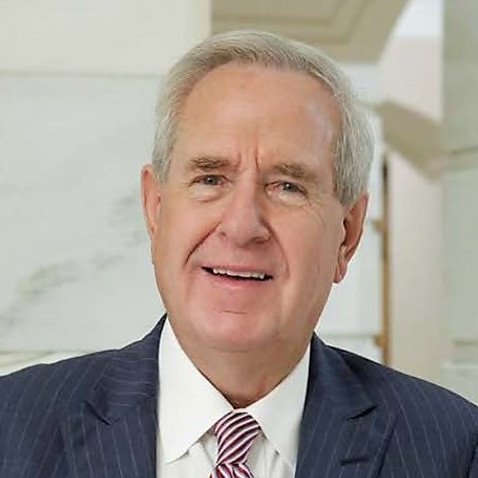
The places that produce us are the places that shape us, and for Ted Mullenix, that place is Arkansas — Oden, Arkansas, specifically. The community is so small there is hardly room for a pin on a map, but it is also the place that gifted him the small-town values that never left him.
“I wouldn’t trade where I grew up for anything,” said Mullenix, co-founder and president and CEO of Little Rock lobbying firm Mullenix & Associates. “I remember I used to walk down to the edge of town, and the population sign said 99. Somehow, as a young boy, I thought that was going to change one day, but the sign stayed that way forever and ever.”
That the sign remained frozen in time is emblematic of the enduring value of places like Oden, where times come and go more slowly, and change is often held to a standstill. Family and community are sacrosanct there as one generation pours into the next with the expectation that ritual would be repeated.
The Mullenix general store, therefore, was more than merely a place to buy crackers and coffee both for the family that ran it and the local assemblage that adopted it as an important center of community life.
“The atmosphere inside that store, I think, shaped a lot of my personality,” he said. “People would come to town back then on Saturday and buy their groceries. They’d come in out of the woods and from back up in the hills and come to town and do their shopping. My mother was a real people person, and if I have any kind of personality to meet people, it came from my mom. I was in that environment and got to know so many people. The values of that town and the people in it, I think, shaped my life forever.”
Time is not the only thing accepted as inevitable in places like Oden; so are the facts, frailties and sometimes unfairness of life of the kind that deprives an 11-year-old boy of his beloved mother to cancer. True to form, family stepped in, including his grandmother and aunts, but it fell to father and son to navigate a new normal in life.
“My dad was a strong person, and we just both came to the realization that it was going to be he and I, and we would make it just fine,” he said. “We closed that grocery store, and my dad built a broiler house. We were one of the first in Montgomery County to ever put 500 chickens inside a house.
“He never stressed for me to do anything specific [for a career], really, except work hard if we were working in the chicken house or whatever. As a matter of fact, he had two chicken houses later on, and he took care of one, and I had to take care of mine, and he wanted my chickens to be as big as his.
“Back then, you really had to worry about how much chicken feed you used or wasted or whatever. It took us about eight weeks to raise a 3-pound broiler, maybe 3 1/2. Now they grow those things in three weeks or something like that.”
In addition to his work ethic, Mullenix’s parents also instilled in their youngest a love of and aptitude for music, though not quite to the degree that Ted’s father would have preferred.
“My mom was a great singer, and my dad could read music,” he said. “Two things I regret that I didn’t listen to him about was learning how to read music and, second, not taking piano lessons like he wanted me to.
“I had some friends who were in the same class I was, and their dad was a great, great musician. I used to go and visit him, and we’d end up playing music. He taught me how to play guitar and that kind of thing. I still can’t read music, but I’ve used what they call in Nashville the number system. Half the musicians in Nashville or two-thirds of them can’t read music, but they do a number system that lets you do the different chords.”
Music would begin to play a more fundamental role in Mullenix’s life when, at 17, he and his new bride moved to Hot Springs. There, he lived the life of a gigging musician, playing local bars and clubs while holding assorted day jobs. Driving a gravel and sand truck, selling insurance, parking cars at the bygone Vapors nightclub, and selling radio advertising would eventually all crowd for space on his list of onetime occupations.
“I was working wherever I could get a job,” he said. “I went to work at the shoe plant in Hot Springs, and God bless people who make shoes, but it wasn’t for me. I had my application in at a milk company and anywhere else where I could be outside and do my own thing.
“One day, the boss said, ‘You got a phone call,’ and it was place called Carter’s Dairy in Hot Springs. Mr. Carter said, ‘Hey, we got your application in, and we’d like you to drive a milk truck. When could you start?’ That ended my shoe career.”
Splitting time between the dairy and the honky-tonks was about as different as the night and day shifts they occupied. Long known for its roguish nature, the city was still plenty rough around the edges as the young musician started playing around town. He learned to take whatever the gigs gave him in stride.
“First time I started knocking doors to play music in Hot Springs, you’d go into the club — I’ll use the American Legion Club as an example — and the walls were lined with slot machines. It was wide-open gambling when I first started playing,” he said.
“I played dozens of places, and honestly, people would get into fights, you know? A lot of fights broke out. Actually, it wasn’t that bad; people might have one too many drinks and get into a scrap over something. That was the way life was back then.”
Whatever Mullenix saw from the stage was child’s play compared to the next big venture in his career. In 1982, for reasons he cannot quite explain and under circumstances he cannot quite justify, he was elected to the Arkansas legislature in what has to rank among the state’s unlikeliest political victories.
“My family, none of them ever had anything to do with [politics]. My dad was as far from politics as anybody ever was. I mean, I think he voted, but I’m not really sure,” Mullenix said. “The closest thing I ever saw in politics growing up was my school superintendent, who served in the legislature for 46 years. Maybe that was what did it; I’d see him come home from the legislature, and he’d come down to our store, and he had the legislator plates on and all that. He probably had some influence on me. He also had the biggest shock of his life when I got elected because of the kind of student I was in school.
“I don’t know, really, how it happened. I used to drive by the state Capitol all the time, and one day I realized I’d never been in the Capitol building, so I just went in, and I sat in the gallery, and I watched. One day, as I got back in my car, I thought, ‘You know, I can do that.’”
Not only did Mullenix know nothing about serving in public office, he had thrown his hat in against a 12-year Democrat incumbent in then-Gov. Bill Clinton’s Arkansas on the Republican ticket during an era when the Natural State ran bluer than Lake Hamilton.
“Quick story: I had to file in two counties, so I filed in Garland County and went to Saline County to file,” he said. “I sat down and said, ‘I’m going to run for state representative, and Saline County’s going to be a part of my district,’ so he gave me the papers and all this, and I said, ‘Well, have you got the Republican paperwork?’
“He said, ‘What?’ I said, ‘Have you got any Republican papers?’ He said, ‘I don’t know how to do that. We’re going to have to find a Republican for you to talk to,’ and that was Doyle Webb, who was later a senator himself and chairman of the party. He came down and got me filed.”
Not knowing what else to do, Mullenix started knocking on doors, a practice candidates had largely abandoned by the 1980s in favor of advertising, yard signs and volunteers making phone calls. Green though he was at campaigning, Mullenix innately understood the value of personal connection. His years in front of audiences and in sales had wrung out all fear of engaging strangers, so it did not faze him to hit the street and meet people in person.
“I enjoyed it,” he said. “It was harder running as a Republican, I’ll assure you of that, but I just told them what I wanted to do when I got [to the legislature]. I talked about roads, of course. I talked about needing a bypass around Hot Springs. I told them I wanted to be the people’s voice. I think a lot of people appreciated that personal connection.”
History shows he was right; Mullenix became the first Republican elected from Garland County since Reconstruction, a win that began 16 years in elected office. During that time, he would serve as minority leader and was appointed chairman of the State Parks Subcommittee. During his tenure in office, he also became known as a fierce advocate for the state’s tourism industry.
“Tourism was one of the things that I was very, very interested in, being from Hot Springs. I started talking about tourism as an industry just like agriculture is an industry,” he said. “I helped write and pass the 2-percent tourism initiative under Gov. [Mike] Huckabee. I see that as a real accomplishment.”
Mullenix’s passion for tourism as economic development came honestly. The same year he started in the legislature, he took the boldest step of his professional life, opening a 700-seat live performance theater in Hot Springs. Music Mountain Jamboree offered entertainment to audiences hailing from all over the United States. The venue earned Mullenix a living without being on the road, as with previous jobs, while also filling his time when the legislature was out of session and feeding his love of performing.
“I love music, and I love Branson and the kind of shows that they have,” he said. “I began to think about opening the theater, and I went and found a building. I went to the bank, and they had a little faith in me. Thank goodness I was a state representative because I think if I wasn’t and I’d given them my idea, they would’ve booted me out.”
Money in hand, Mullenix set about refurbishing the building for a show theater, the first of its kind in Spa City. Like all new entrepreneurs, he wore many hats and learned many lessons getting the place open and keeping it operating, even stretching himself into a new form of entertainment for the first time.
“We converted that old building into the theater, and as I was about to open the show, I came to the conclusion that if you’re going to be a family-oriented show and somewhat like Branson, you’ve got to have a comedian,” he said. “Branson had these good comedians, but when I went up there, I found out I couldn’t afford them. I went to see my banker again, and we were talking, and I said, ‘I don’t know what I’m going to do about a comedian.’ The banker looked at me and said, ‘Ted, you better learn how to be funny.’
“I went home and figured out my character, Homestead, blacked a couple of my teeth out and put my hat on and became a comedian for the show. To this day, I’ll walk down the aisle of the state Capitol and somebody will holler, ‘Hey, Homestead!’ I never ever dreamed of doing the comedy in my show, but it was one of the biggest blessings in my life.”
The theater operated for nearly 25 years, long enough for Mullenix to be joined by several family members on stage and earn him the 2026 Arkansas Honors Arkansas award from the Arkansas Country Music Awards. Today, he puts all of his life skills to work representing clients through his lobbying firm, Mullenix & Associates, where a sense of humor, communication, connections and his long-held work ethic are indispensable tools in his toolbox.
Along with his team, which includes Julie Mullenix, his wife and company-co-founder, he has scored major wins in economic development and job-creation projects for companies such as Big River Steel, Hybar and Zekelman Industries in Osceola and Highland Pellets in Pine Bluff. He has also grown Arkansas’ tourism industry through representation of Arlington Resort Hotel & Spa, Oaklawn Hot Springs, and many others.
“We’re very diverse in the clients that we have now, but we started with one client and worked our way up from that,” he said. “I think they saw our work ethic and said, ‘Hey, these folks are going to be there, and they’re going to work hard to represent us.’ I’ve told every client, always, we’re going to be at the state Capitol for you. If there’s a meeting going on, we’re going to have somebody over there. We’re going to be monitoring and watching so you can run your company. That’s worked out to be a good policy for us.”
TED MULLENIX ON DEDICATION
“I’ve always been a hard worker, whether it was traveling on the road, selling different things, or performing. I remember I got a job at Wonder Bread, which is one of the earlier jobs that I really made any money at, driving a Wonder Bread truck. I had a long route, and I remember many, many times, I’d play music till 3 o’clock in the morning, change into my uniform, go down and load the bread truck up. Music’s been a big part of my life. I love it, but I always had to do what it took to make a living. For me, that meant working hard. I think that’s a must if you’re going to be successful.”
TED MULLENIX ON RESILIENCE
“People can accomplish almost anything if they set their head to it. I think people look at someone running for office, and they think you’ve got to be somebody special to do that when what you really have to do is want it badly enough. If you’d have told me as a kid I would be a state representative, no, the idea of that scared me. I’ve learned everyone is special in some way, and everyone faces obstacles. The secret is to not let one obstacle stop you, you know? Pick yourself up and take off.”
TED MULLINEX ON STANDING IN THE MINORITY
“Getting elected as a Republican in Arkansas today isn’t as hard as it once was because they’re in such a large majority. When I was in the legislature, that wasn’t the case, and I often found myself the lone voice on one side or the other of an issue. Those experiences taught me how important it is to have the courage and respect for yourself to be honest about what you’re doing and continue working in a forthright fashion. I never have been shy, and I’ve never had a problem meeting people and appreciating them, which also helped.”
TED MULLENIX ON QUALITIES OF LEADERSHIP
“I think what’s most important to a leader is their work ethic and their personality of treating everybody with respect. I don’t care what kind of job you have; you have to learn to appreciate everybody. I don’t care if someone’s coming out here doing some work, dirt work on my property, doing whatever you’re doing. I try to show appreciation for them and respect for them. I think sometimes people don’t give enough respect to people who do certain kinds of work or are in certain kinds of service professions, but I think great leaders do.”